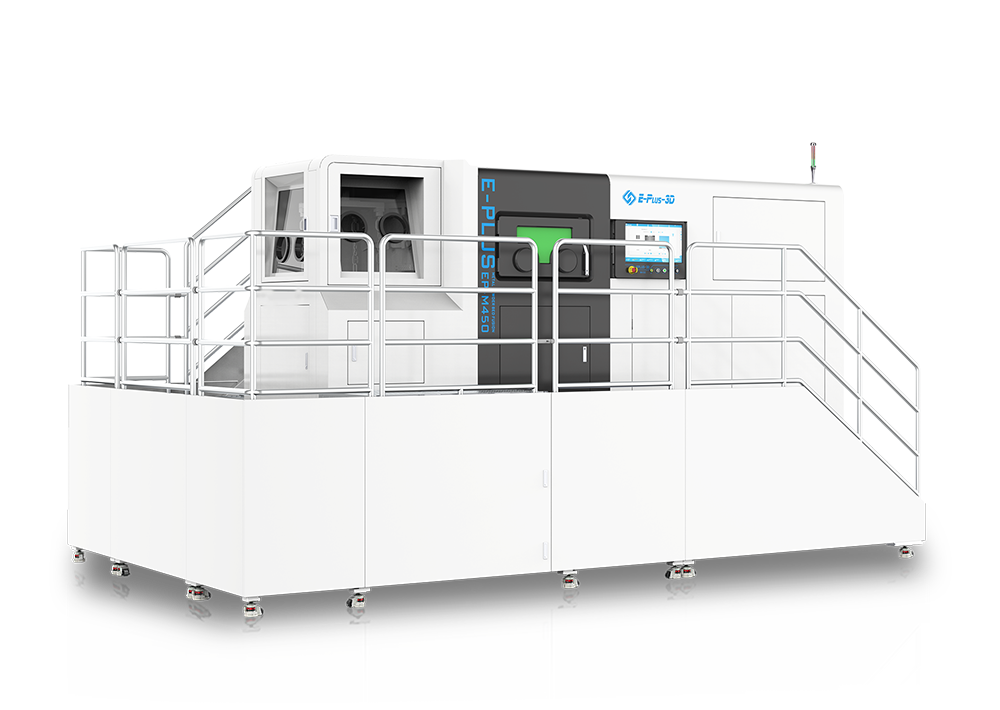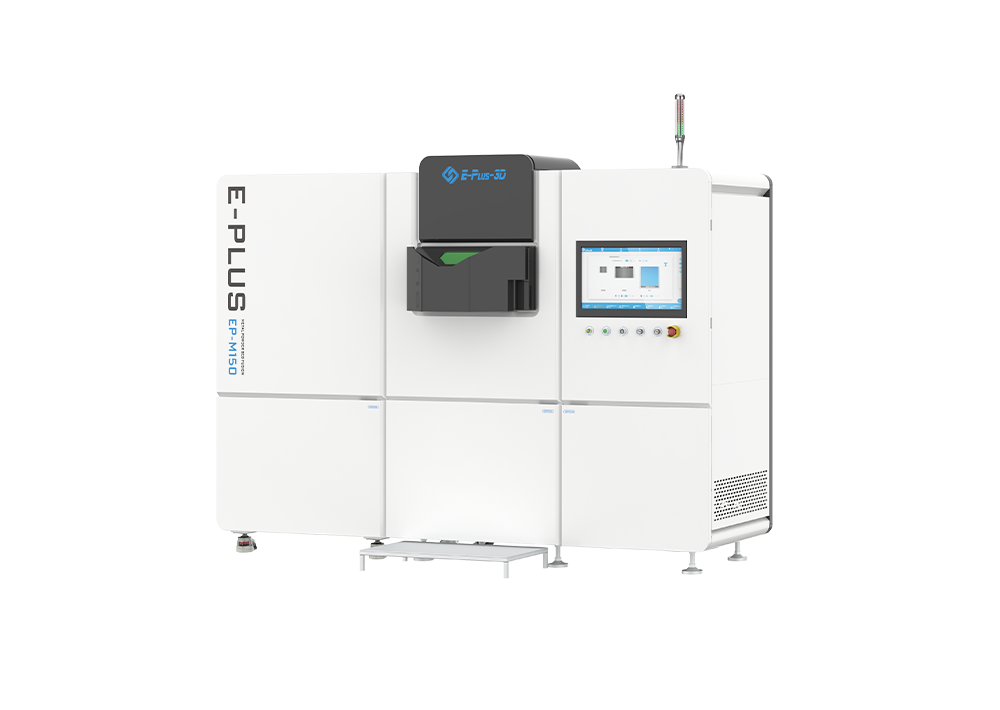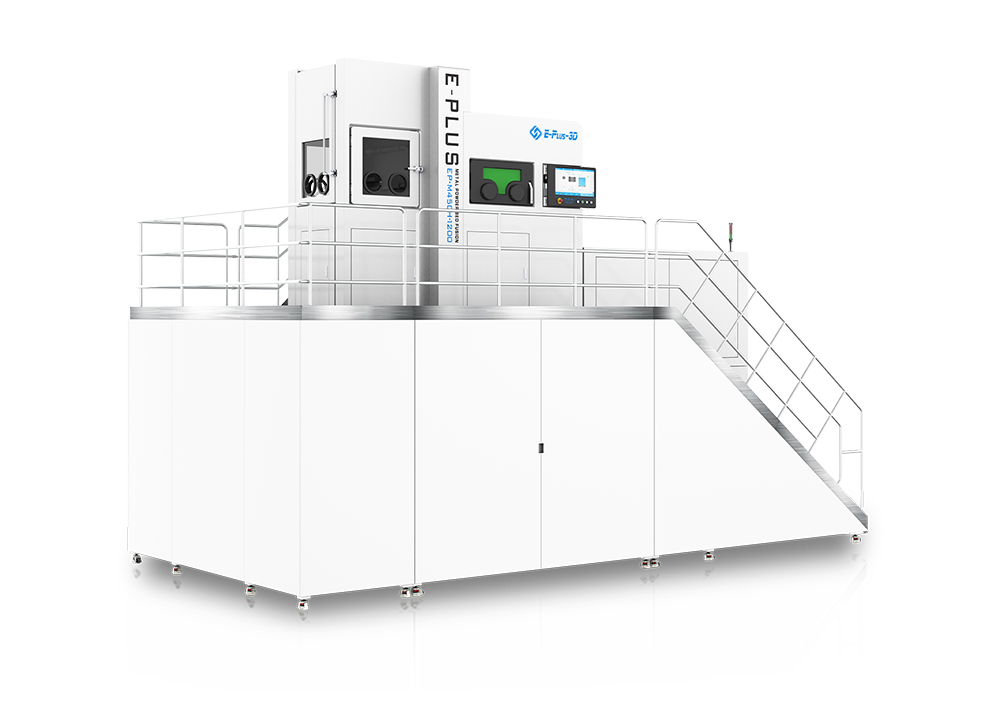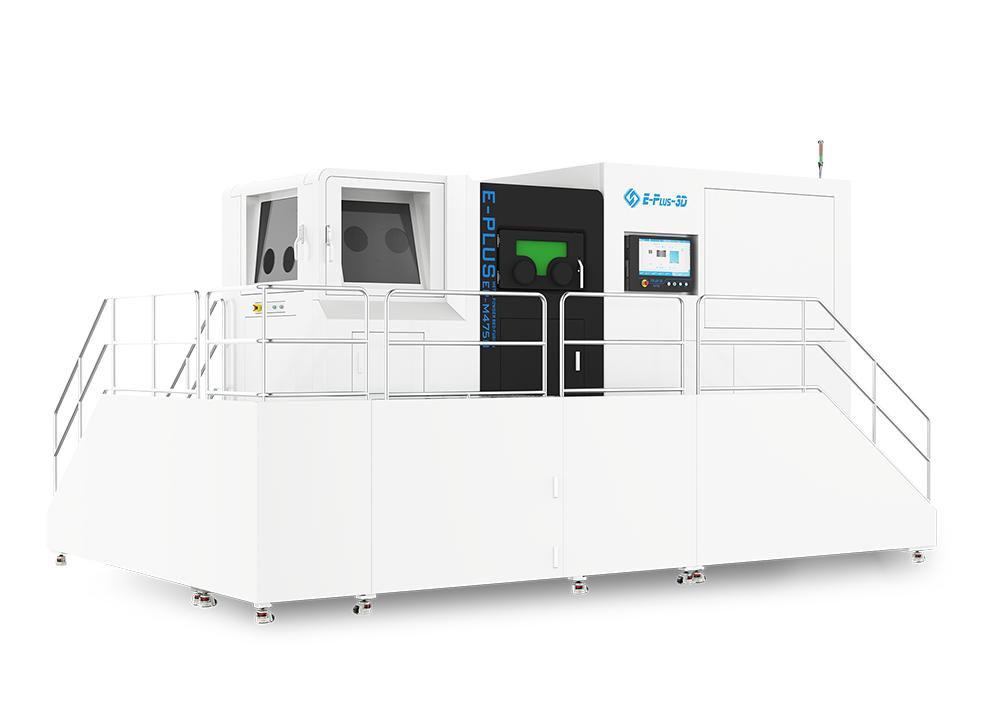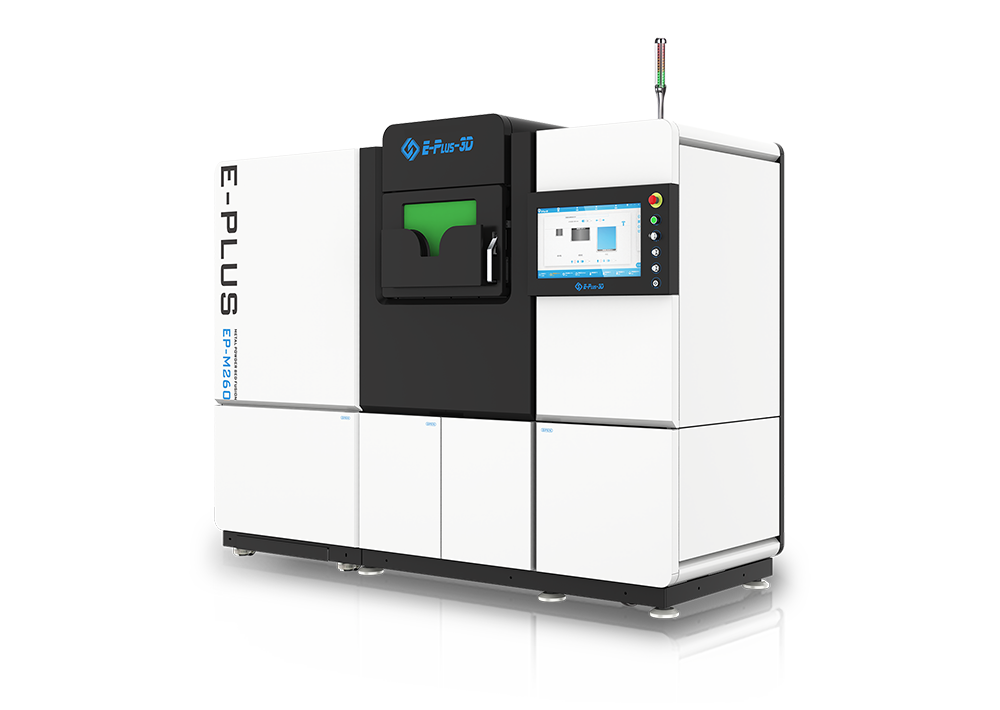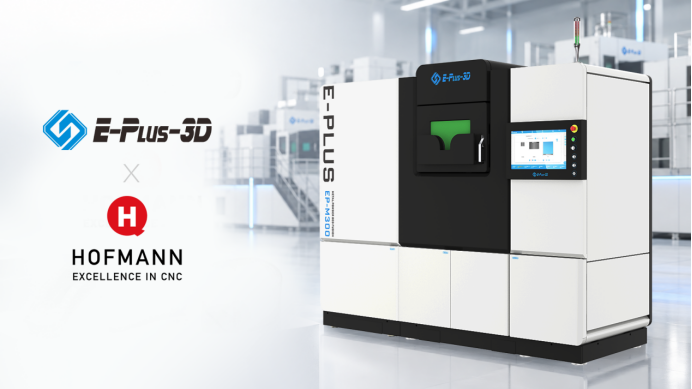







Eplus3D, a provider of industrial metal 3D printing solutions, is collaborating with Oqton, a developer of advanced manufacturing software, to strengthen the compatibility of 3DXpert with Eplus3D laser powder bed fusion (LPBF) systems. The partnership brings together Eplus3D's equipment and application expertise with Oqton's build preparation and process optimization capabilities, reinforcing a shared commitment to open, integrated, and reliable software-hardware ecosystems for industrial-scale additive manufacturing.
The cooperation has two priorities: applying 3DXpert's MeltControl technology to challenging geometries and developing a more direct connection between software-based build preparation and Eplus3D machine execution. A joint demonstration on the Eplus3D Metal PBF systems has already provided practical evidence of the technology in use, while broader software integration continues to progress.
MeltControl for Challenging Geometries
In LPBF, low-overhang surfaces often require support structures to stabilize the build and manage heat. These supports can increase material use and post-processing, especially when they are located inside enclosed or difficult-to-access features.
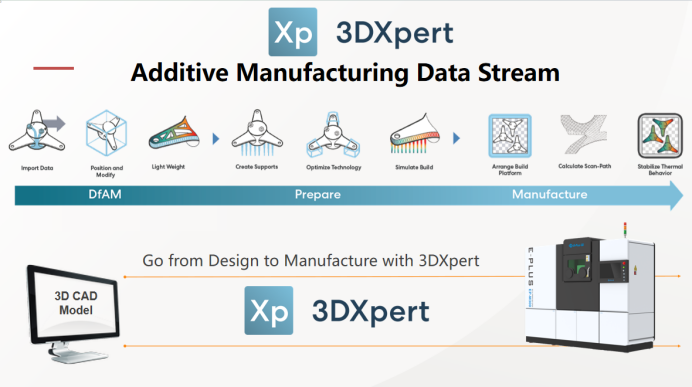
Figure 1 - Oqton's 3DXpert workflow
Oqton's MeltControl, available within the 3DXpert software environment, addresses this challenge with physics-based, localized scan path optimization. Instead of applying a fixed set of processing parameters throughout the part, it uses simulation-driven scan vector adaptation to account for changing conditions across the build.
The approach considers factors including down-facing angles, proximity to heat-sinking material and local thermal conditions to adapt energy input where needed. For manufacturers, this creates opportunities to reduce dependence on conventional supports and explore geometries that would otherwise demand extensive support removal. The degree of improvement remains application- and process-dependent.
An Inconel 718 Demonstration on the EP-M300
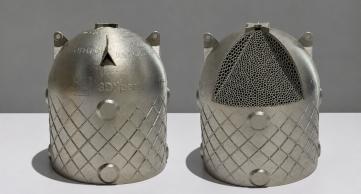
Eplus3D and Oqton have applied this approach in practice by successfully printing a complex Inconel 718 fuel tank on the Eplus3D EP-M300 using 3DXpert and MeltControl. Its curved profile and low-overhang regions provided a relevant test of localized scan strategy optimization.
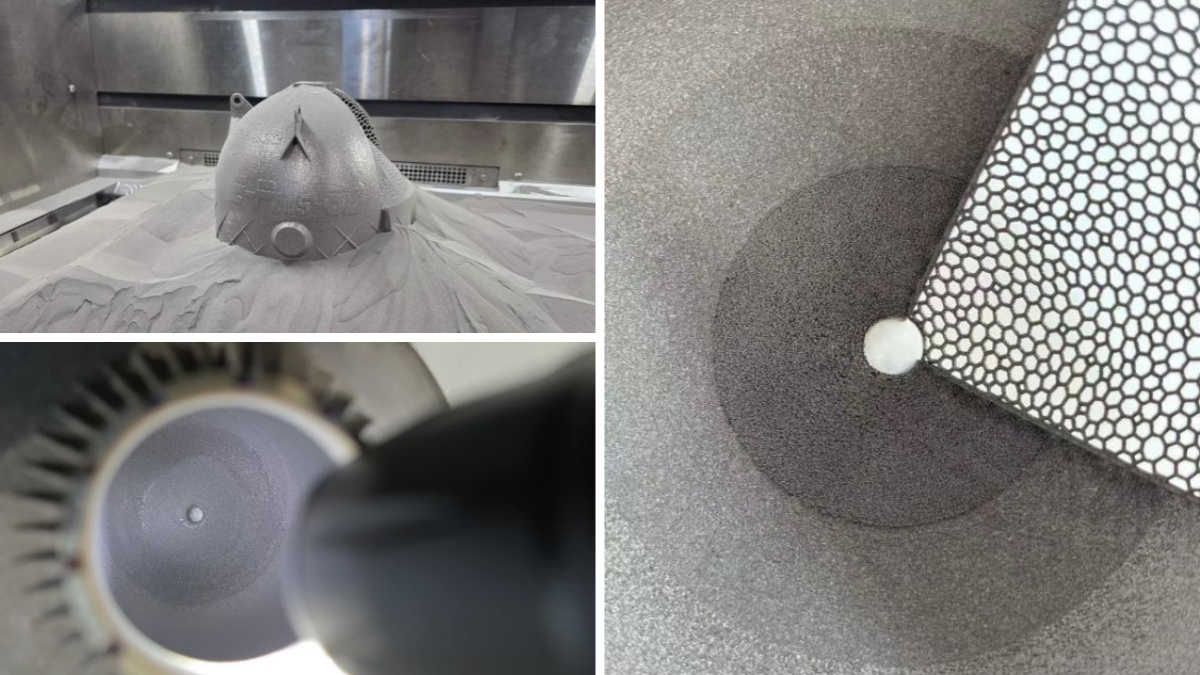
Figure 2 - Inconel 718 fuel tank manufactured on the EP-M300
Eplus3D supplied the LPBF platform and technical support, while Oqton contributed software and process optimization expertise. The completed component demonstrates that MeltControl-based strategies can be applied on Eplus3D hardware, offering a concrete reference for further development. Similar strategies may be relevant to other challenging geometries in aerospace and propulsion, including volutes, turbopump components and complex flow passages.
“At Eplus3D, we see software compatibility as an essential part of delivering practical industrial metal additive manufacturing solutions,” said Raymond Zhang, Sales Director APAC, International Business Department at Eplus3D. “The Inconel 718 fuel tank printed on our EP-M300 shows how Oqton’s MeltControl can be applied in a real build. As part of this partnership, 3DXpert is now offered as one of the standard software options for Eplus3D systems. Through deeper 3DXpert integration, we aim to simplify the transfer of build data and process strategies into machine execution, helping customers put advanced software capabilities to work.”
Integrating 3DXpert with Eplus3D Build Workflows
For users, compatibility involves more than producing an individual part. It also depends on how reliably design preparation, slicing data and established process parameters move from software into the printer. The collaboration therefore extends to several Eplus3D-specific integration areas:
- Eplus3D slicer integration: Incorporating Eplus3D slicing capabilities into the 3DXpert environment to support machine-oriented build preparation.
- Direct EPI output: Developing a direct route for 3DXpert to generate EPI files for Eplus3D systems.
- EPHATCH parameter conversion: Enabling existing EPHATCH process parameters to be transferred into the EPI-based workflow.
- Further MeltControl implementation: Bringing optimized scan strategies more closely into the Eplus3D toolpath and printing workflow.
These are technical integration directions rather than a claim that every function is already commercially available. As development and validation progress, the intended customer benefits are fewer manual data transfers, better continuity for existing process parameters and access to advanced scan strategies within a more cohesive workflow.
A Clearer Path from Design to Production
The cooperation with Oqton extends Eplus3D's commitment to software compatibility and practical manufacturing solutions. By combining the application demonstration with ongoing 3DXpert integration, both companies are working toward a clearer path from digital build preparation to execution on Eplus3D metal PBF systems.
The result is a more streamlined workflow that reduces manual intervention, preserves proven process parameters, and unlocks advanced scan strategies on Eplus3D equipment, enabling faster qualification of challenging parts, lower scrap and post-processing costs, and greater confidence in repeatable, production-grade metal additive manufacturing.
“Manufacturers turning to metal additive for their most demanding parts need software and hardware that work together seamlessly, without sacrificing the freedom to choose the right machine for each application,” said Sridharan Hariharan, Vice President of Sales and Customer Success at Oqton. “Our collaboration with Eplus3D does exactly that. By bringing 3DXpert and MeltControl closer to Eplus3D systems, we are helping customers solve challenging geometries, reduce supports and post-processing, and move from first build to qualified, repeatable production with greater speed and confidence.”
About Oqton
Oqton accelerates intelligent additive manufacturing with software that spans the full production lifecycle, from design to monitoring. Its portfolio includes 3DXpert, an all-in-one, integrated additive manufacturing software for design, build preparation, simulation and inspection; the Oqton Manufacturing OS, a configurable workflow system that gives manufacturers control of their AM operations through MES capabilities and a Digital Warehouse for certified spare parts; and AMVero, which provides real-time additive anomaly detection powered by AI, machine vision and IIoT. Hardware-agnostic by design, Oqton solutions serve manufacturers in aerospace, automotive, energy, healthcare and industrial markets worldwide.
For more information, visit www.oqton.com
About Eplus3D
Eplus3D pioneered China's first powder bed fusion (PBF) machine in 1993 and has since dedicated itself to the research and development of industrial-grade additive manufacturing systems andsolutions, with a core focus on its proprietary MPBF™ (Metal Powder Bed Fusion) 3D printing technology. The company delivers professional application solutions across a wide range of industries, including aerospace & aviation, energy, oil & gas, automotive, mold & tooling, electronicgoods, and precision manufacturing.
Eplus3D has established facilities in Beijing, Hangzhou and Stuttgart. The company consistently maintains a high level of annual investment in scientific research, resulting in a comprehensive intellectual property portfolio that includes invention patents, utility model patents, software copyrights, and design patents. It has achieved significant advancements across key areas of additive manufacturing, including design, processes, software, materials, and post-processing technologies. To date, Eplus3D's AM solutions have been successfully implemented for customers across more than 50 countries and regions worldwide, including Europe, the Americas, the Middle East, East Asia, and Southeast Asia.
For more information, visit www.eplus3d.com