In early 2026, the global commercial aerospace industry entered a phase of vigorous development, demonstrating strong growth momentum. Against this backdrop, commercial rockets, as a core segment of the aerospace sector, are driving the integration and innovation of cutting-edge technologies, guiding the space economy to new heights.
In recent years, with the rapid advancement of aerospace technology, global commercial aerospace enterprises have increasingly focused on the operational goals of "high frequency, low cost, and reusability," propelling the industry into a new stage. Leading Chinese companies such as LandSpace, Space Pioneer, Galactic Energy, CAS Space, and i-Space have leveraged advanced technologies, including metal additive manufacturing, to achieve breakthroughs in key areas such as rocket development, launch, and recovery, accelerating the pace of commercialization.
As a key supplier of manufacturing equipment for commercial aerospace, Eplus3D has deeply integrated into the global industrial chain with its core capabilities in multi-laser large-format metal 3D printing, securing a significant position in the competitive landscape.
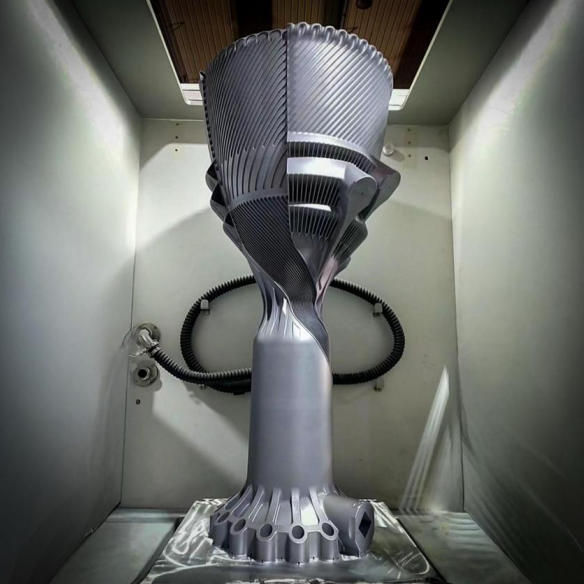
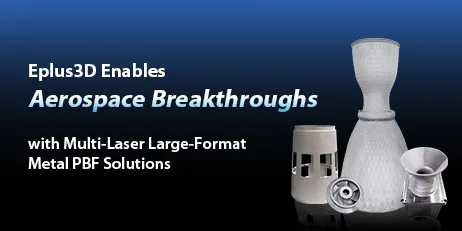
Figure 1 - World's largest 3D-Printed rocket thruster printed by EP-M650H
Technological Innovation Drives Transformation in Commercial Aerospace Manufacturing
The intense competition in commercial aerospace imposes stringent requirements on manufacturing technology: "lightweight, low-cost, and high efficiency." Traditional manufacturing processes for complex rocket engines often involve hundreds of components and months of assembly. In contrast, Eplus3D's industrial-grade metal 3D printing technology enables the one-time, integrated printing of components, reducing engine weight by over 50%, increasing strength by more than twofold, and shortening delivery times from six months to several weeks. This transformation significantly lowers the cost and time required for commercial rockets while facilitating iterative adjustments during recovery tests. It perfectly aligns with the core development needs of commercial rockets for "high-frequency launches, low-cost operations, and reusability." According to statistics, approximately 70% of the components in commercial rocket liquid engines are now manufactured using metal 3D printing technology, with this proportion reaching nearly 90% in advanced models.
Addressing Key Challenges with Eplus3D Multi-laser Large-Format Metal Additive Manufacturing
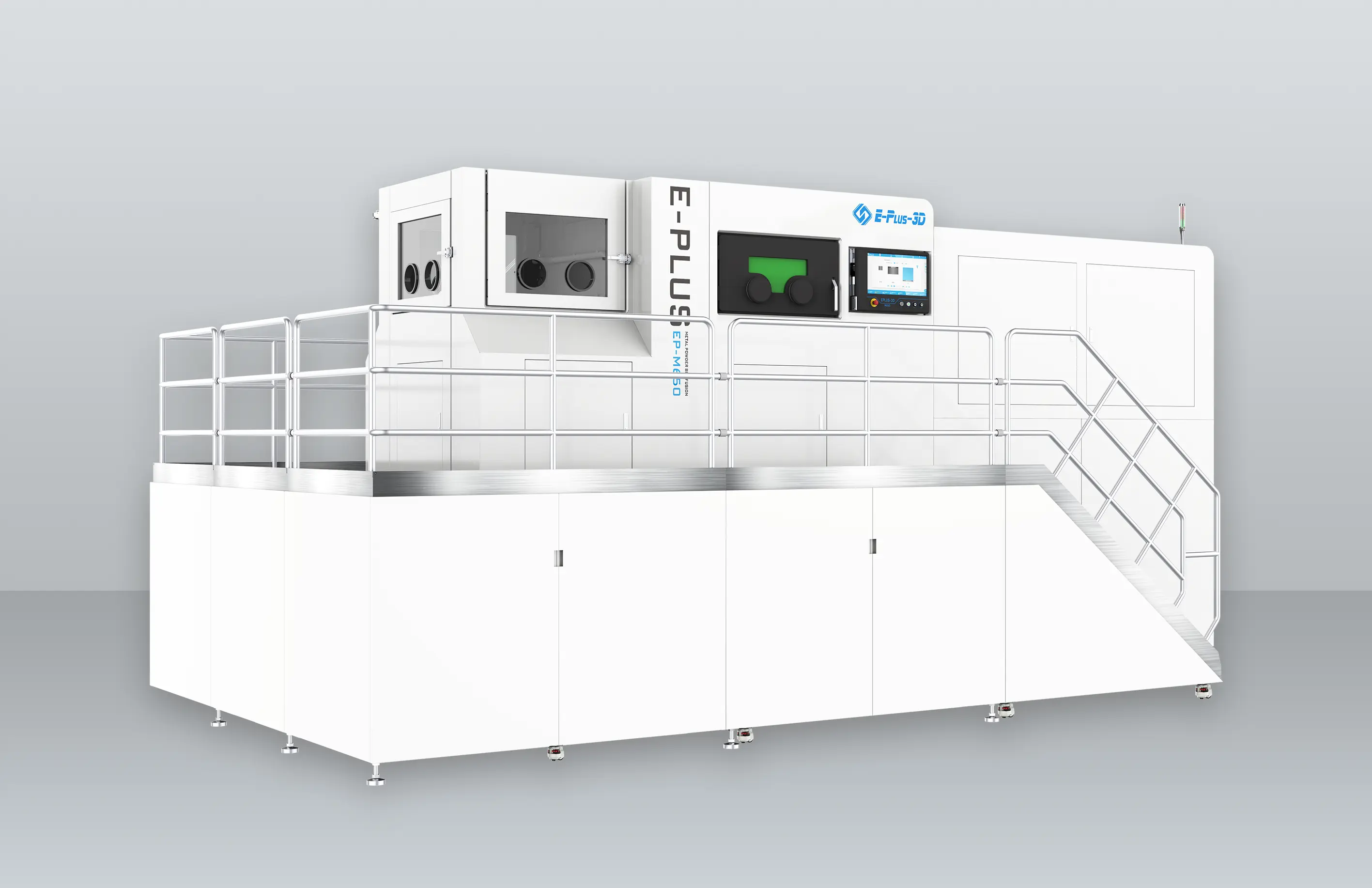
With over a decade of dedication to metal powder bed fusion (MPBFTM) technology, Eplus3D has successfully overcome three major industry bottlenecks that once hindered the application of large-scale metal additive manufacturing: multi-laser stitching accuracy and stability, airflow uniformity, and precision control of ultra-heavy-duty forming platforms.
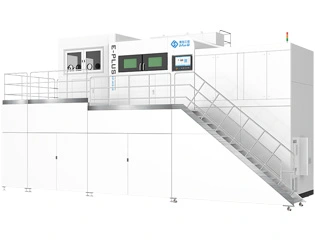
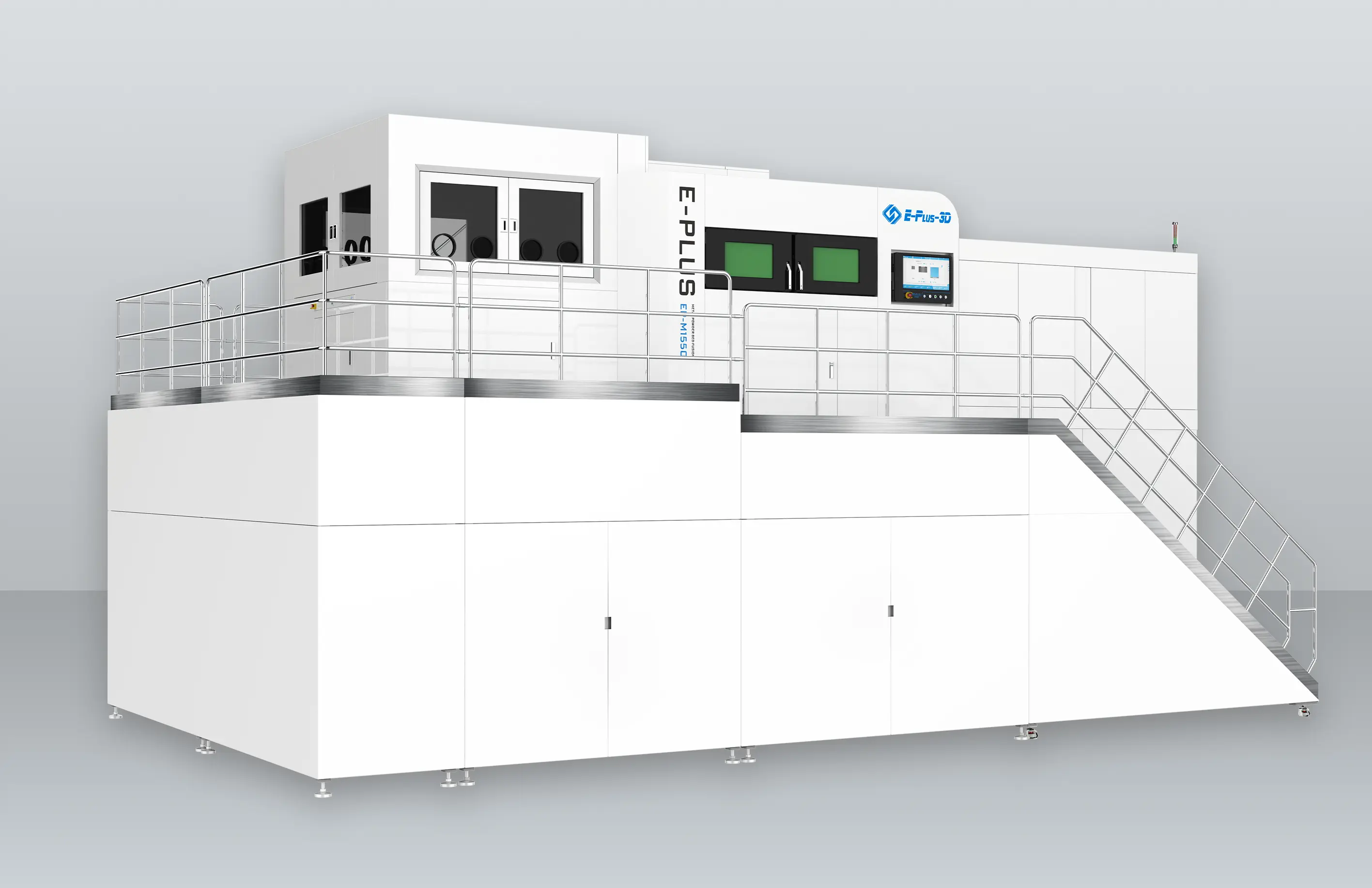
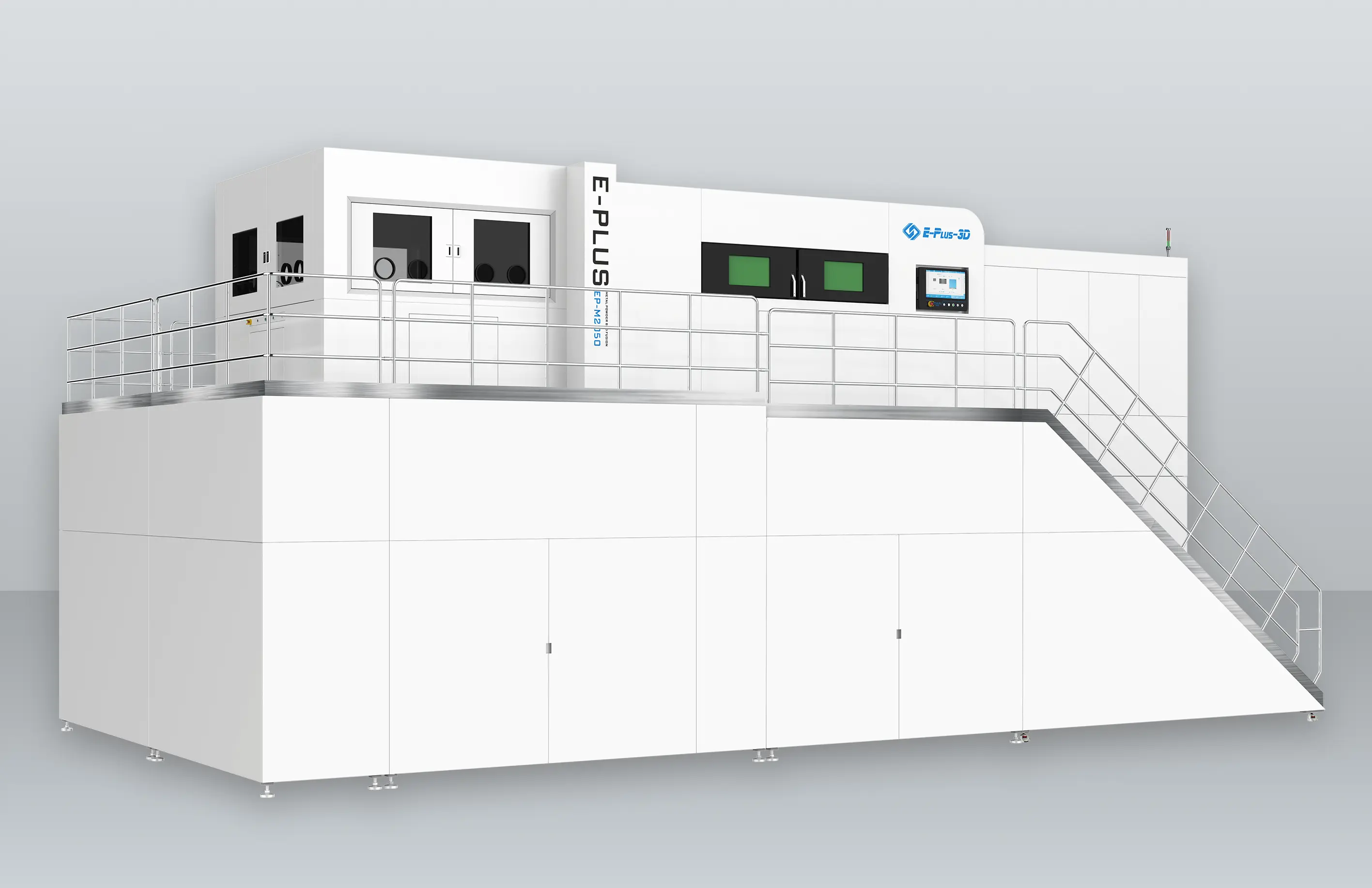
Building on its long-term accumulation of core technologies - such as multi-laser matrix arrangement and correction stitching, multi-laser synchronized scanning, airflow stability control, and precision control of ultra-heavy-duty forming cylinder lifting mechanisms - Eplus3D launched the world's first super-meter metal PBF system with three-axis forming dimensions exceeding one meter in 2022, achieving commercial deployment. In 2024, the company further introduced its flagship product EP-M2050: the world's largest system of its kind, with three-axis dimensions exceeding two meters and capable of integrating 64 lasers. This advancement provides critical industrial machinery and equipment foundations for the high-efficiency, low-cost production of rockets with greater thrust and payload capacity.
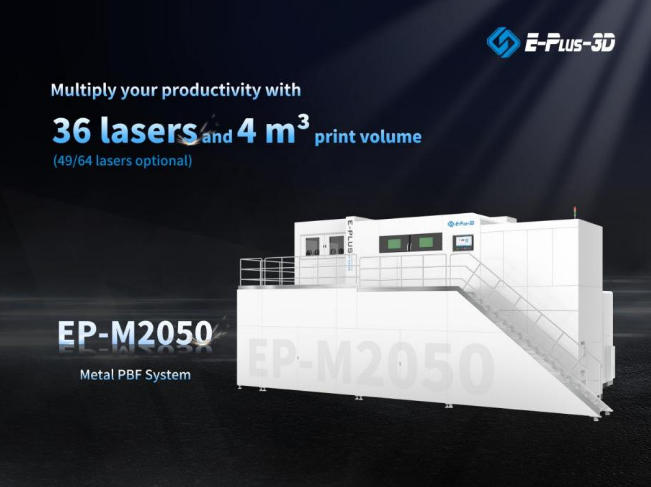
Figure 2 - EP-M2050 with 36 lasers and over 4m3 build volume
Empowering the Industrial Chain with a Global Service Network
Eplus3D systems have deeply served leading commercial aerospace enterprises. The successful development of engines such as LandSpace's Zhuque-3 TQ series, Space Pioneer's TH series, Galactic Energy's upper-stage orbital and attitude control engines and CQ series, and CAS Space's PE series has relied on Eplus3D metal PBF machines and solutions.
These companies utilize Eplus3D metal PBF solutions and processes for key components like rocket engine thrust chambers, nozzles, turbopumps, valves, and gas generators, meeting the design and manufacturing requirements for high-strength, complex internal flow channel structures. This continuous improvement in engine thrust enables scenarios such as large-scale satellite constellations and space station cargo missions. Additionally, Eplus3D metal printing solutions has been extensively involved in the process development of core components for commercial aerospace satellites, including electric propulsion systems, gas tanks, and thermal management systems, supporting multiple satellite companies in on-orbit verification. Recently, LandSpace, Eplus3D, and other enterprises have jointly accelerated the research and development of equipment and processes for next-generation rocket large-scale nozzles and other complex aerospace structures.
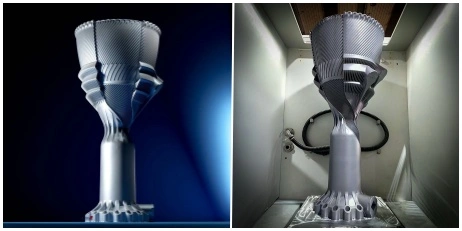
Eplus3D overseas expansion has also yielded significant results. With LEAP 71, Eplus3D co-produced the world's largest single-piece printed thruster - standing 1.3 meters tall and delivering 200 kN thrust - proving that computational design integrated with large-format AM can achieve power densities 40 times greater than previous systems. For INNOSPACE, Eplus3D delivered three metal PBF systems that enabled the batch production of 13 flight-critical components for its HANBIT rocket, reportedly reducing unit costs by up to 50% and reconstituting its supply chain for greater autonomy.
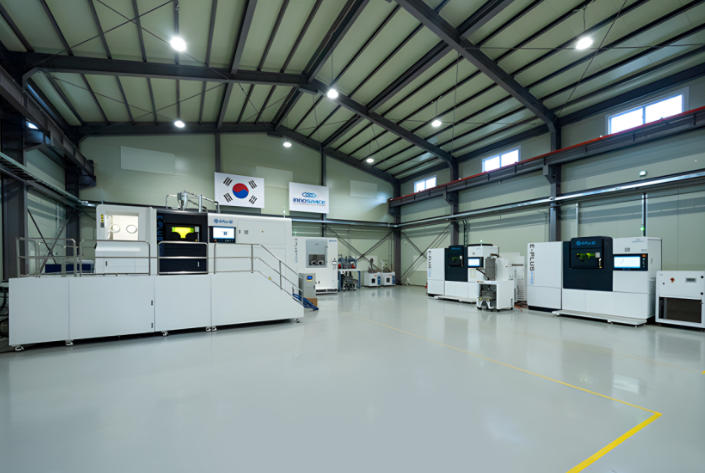
Figure 3 - Eplus3D metal PBF systems at INNOSPACE's workshop
In partnership with UCL Rocket, a student team rapidly developed a regeneratively cooled engine featuring 58 integrated cooling channels, achieving 85.66% combustion efficiency and 5 kN thrust - validating high-performance designs within academic timelines. With subsidiaries in Germany and the United States, and a growing customer base across multiple regions, Eplus3D has established a comprehensive global service network.
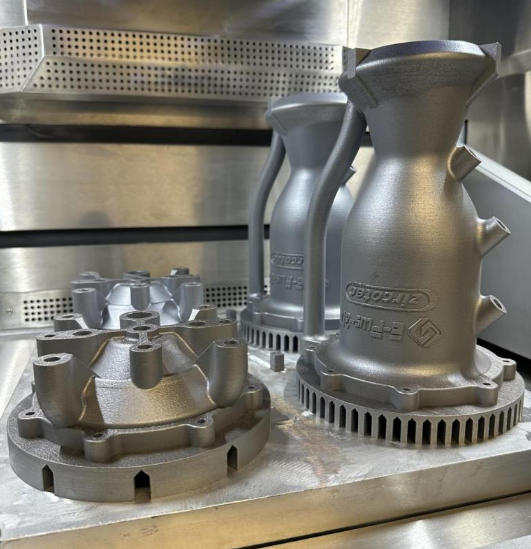
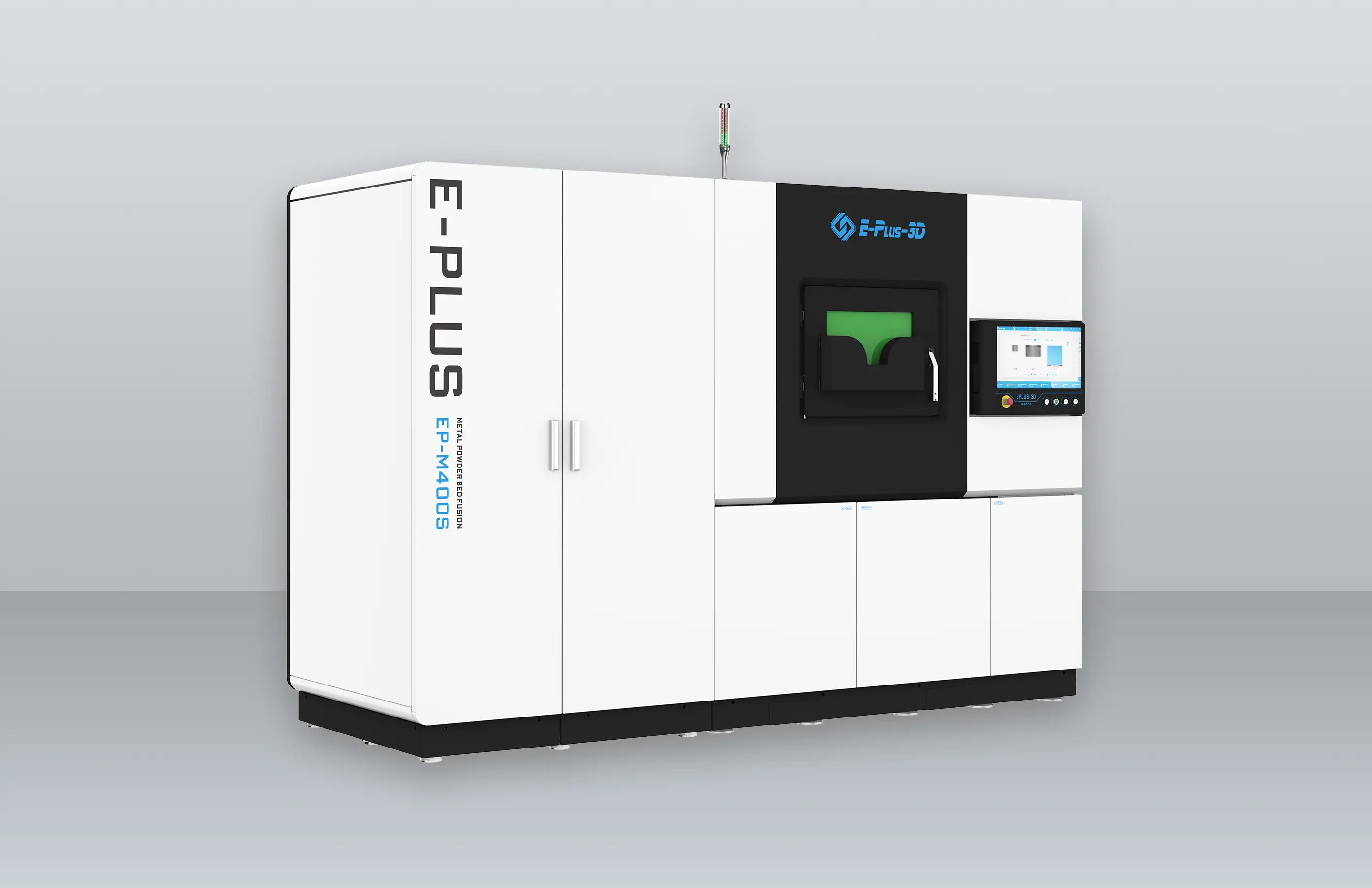
Figure 4 - AlSi10Mg regeneratively cooled engine printed by EP-M400S
Expanding Material Capabilities: High-Conductivity Large-format Copper Alloy Printing with Red Laser
In aerospace, copper serves as the lifeline of thermal management. Its exceptional conductivity is critical for components like combustion chambers and nozzles, yet its high reflectivity has long prevented 3D printing from producing complex, high-performance parts.
Eplus3D confronts this challenge directly with high-power red laser technology. Our optimized process enables stable melting, achieves ultra-high density (>99.9%), and allows for the direct manufacturing of fine features like 0.5mm thin walls and 2.5mm channels - moving copper printing from the laboratory to true industrial production.
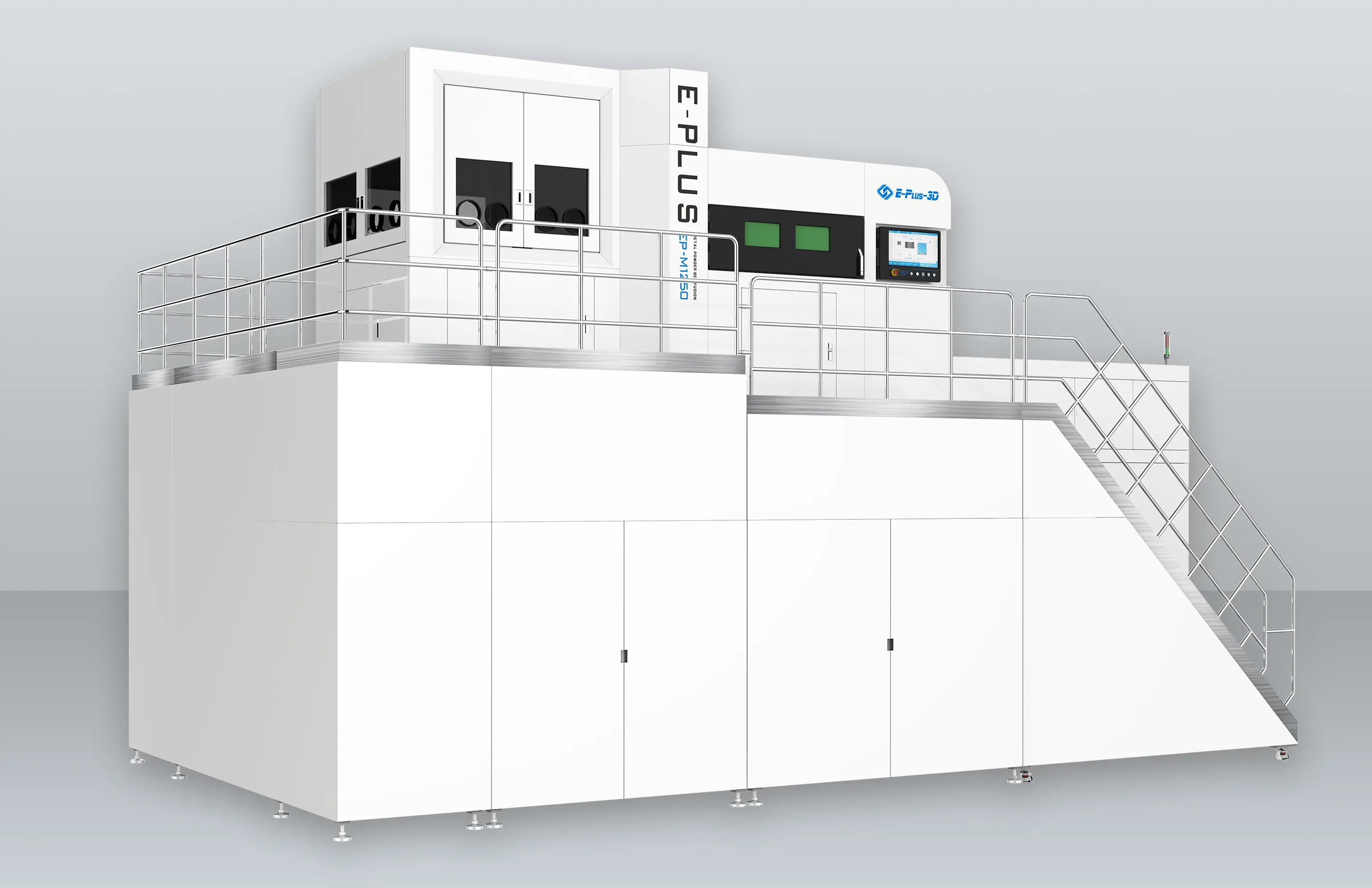
One standout achievement is the production of a φ1030 x 175 mm copper alloy impeller on the EP-M1250 system, reaching 99.97% density while preserving full thermal conductivity. This advancement marks more than a manufacturing milestone; it redefines thermal design freedom in aerospace engineering. By overcoming copper's reflectivity barrier, we enable highly integrated, lightweight components that consolidate multiple parts into one, reduce assembly interfaces, and optimize thermal pathways in ways impossible with traditional methods.
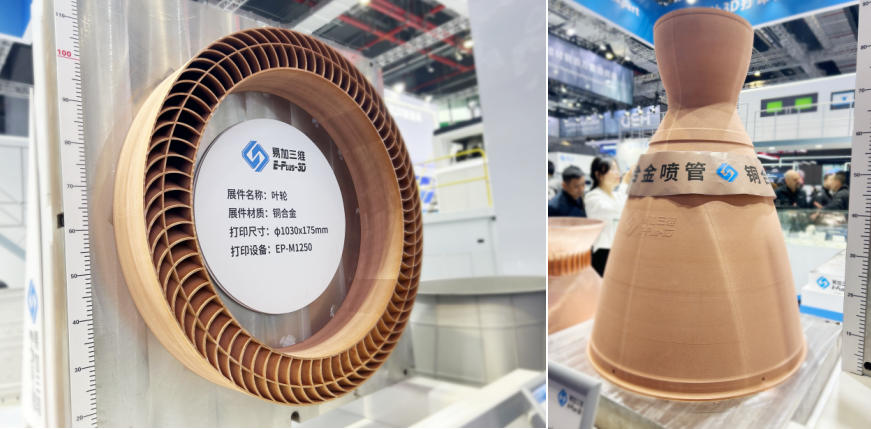
Figure 5 - Meter-scale copper parts printed by Eplus3D Metal PBF Systems
Looking Ahead: Toward Lighter, More Efficient Manufacturing
As commercial aerospace enters a new phase characterized by the parallel development of large-scale constellation deployment and deep-space exploration, metal 3D printing technology is poised for even broader applications. In the future, its unique advantages of "in-situ resource utilization and on-demand manufacturing" in scenarios such as space station maintenance and lunar base construction are expected to open new paradigms for the space economy.
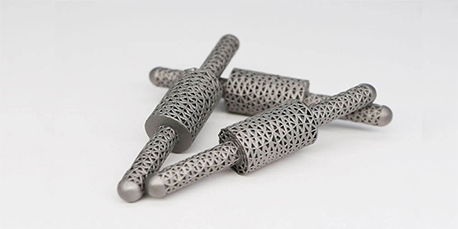
Represented by Eplus3D, metal 3D printing equipment manufacturers are driving transformative advancements in aerospace manufacturing with their "lightweight, low-cost, and high-efficiency" technological features. This technology enables designers to break free from the constraints of traditional processes, rapidly translating complex designs - such as lattice structures and topology optimization - from blueprints into functional components, significantly enhancing research, development, and manufacturing efficiency.
Faced with the opportunities and challenges brought by practical tasks like large-scale constellation deployment, Eplus3D will continue to strengthen technological innovation and deepen collaboration within the industrial chain. By providing robust support for the rapid iteration and engineering implementation of commercial aerospace, the company will contribute to a more efficient and sustainable future for the aerospace industry.